
Is a Grounding Mat for Office Worth It?
The desk can be a surprisingly demanding place to spend eight hours. Between video calls, deadlines, screen exposure, and the physical stillness of computer work, many professionals finish the day feeling wired mentally and stiff physically. A grounding mat for office use is a simple wellness tool designed to bring a small moment of connection and comfort into the place where many people need it most: their workstation.
It is not a replacement for movement, sleep, medical care, or an ergonomic setup. It can, however, be a thoughtful addition to a more intentional workday - especially for people building routines around stress support, recovery, and sustainable performance.
What a Grounding Mat Does
A grounding mat, sometimes called an earthing mat, is a conductive surface that connects to the grounding port of a properly grounded wall outlet or to a dedicated grounding rod outdoors. When your skin touches the mat, the system is intended to connect your body with the Earth's electrical potential.
The concept is based on the idea that direct contact with the Earth - such as walking barefoot on grass, sand, or soil - may influence the body's electrical balance. Office mats offer a practical indoor alternative for people whose days are largely spent on floors, in cars, or behind screens.
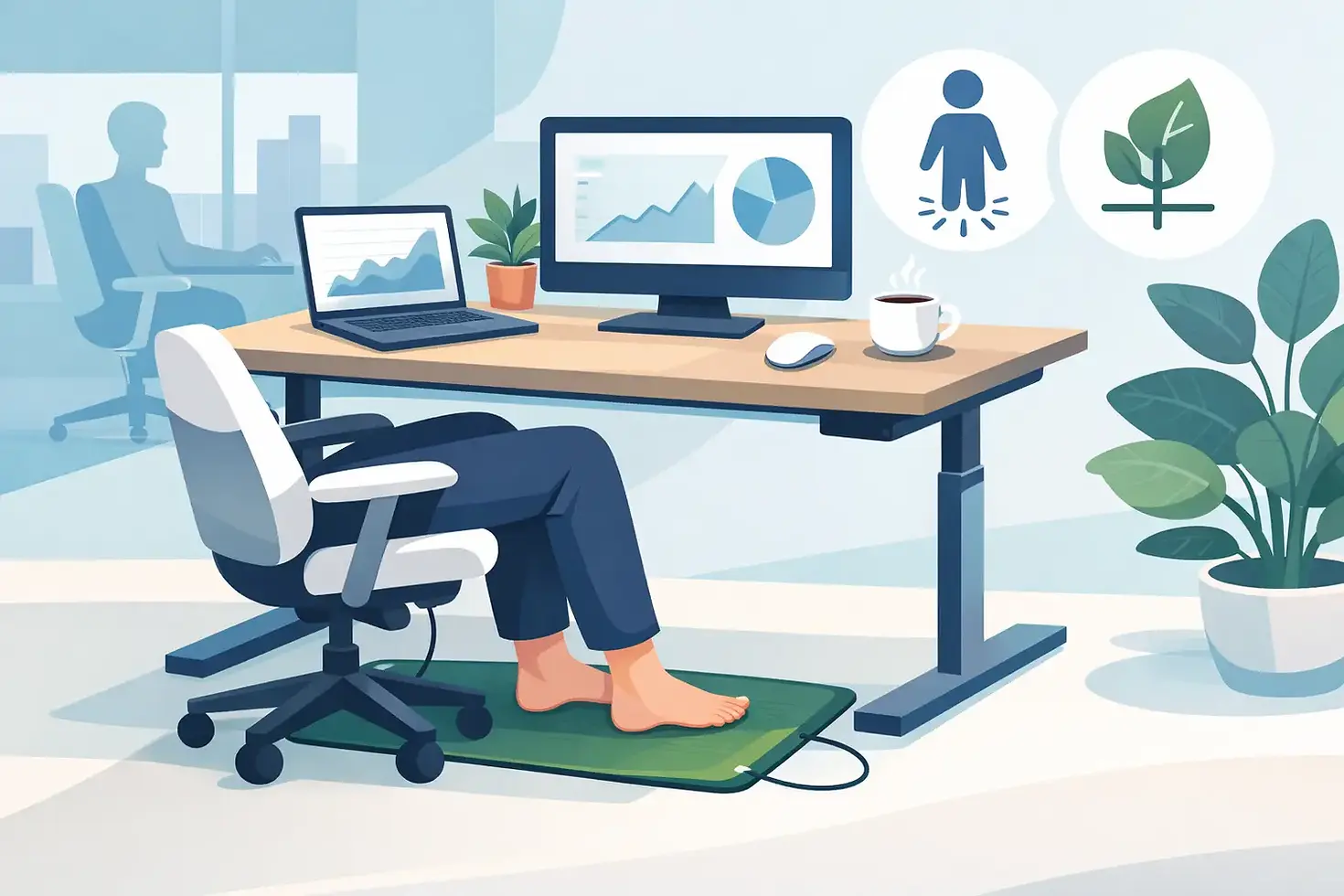
Most office-friendly grounding mats are placed beneath bare feet, though some are designed for contact with hands, forearms, or legs. They do not plug into a powered electrical outlet in the way a charger or appliance does. A properly designed grounding cord uses the outlet's ground connection only, not the live electrical current.
That distinction matters. Grounding is intended to be passive and low-effort: sit down, make skin contact, and continue with your work.
Why Professionals Add Grounding to a Desk Routine
For busy professionals, the appeal is less about adding another task and more about removing friction. A mat can stay under the desk, ready for use during a morning planning session, an afternoon call block, or a quiet stretch of focused work.
Some users describe feeling more settled, less restless, or more aware of the need to pause and reset. Others like the ritual itself. Taking off shoes, placing feet on the mat, and breathing more slowly for a few minutes can create a useful boundary between reactive work and deliberate work.
There is also a practical comfort factor. A soft, well-made mat can make an under-desk area feel more inviting than a cold hard floor. For people creating premium home offices, recovery rooms, executive workspaces, or corporate wellness areas, that small shift can reinforce a culture of taking care of the body while pursuing high performance.
Research into grounding is still developing. Small studies and personal reports have explored potential connections with sleep, stress markers, discomfort, and recovery, but the evidence is not yet strong enough to promise specific health outcomes. A grounding mat should be approached as a supportive wellness practice, not a treatment or cure.
Choosing a Grounding Mat for Office Use
Not every grounding product is equally suited to a work environment. The right choice depends on how you work, the space you have, and whether the mat will be used privately or by multiple people.
Consider the contact area
An under-desk foot mat is often the most natural starting point. It allows bare feet to maintain contact while hands remain on the keyboard and attention stays on the task at hand. If your feet tend to be in shoes throughout the day, plan for specific grounding intervals instead of assuming the mat will work through socks or footwear. Conductivity varies by material, and direct skin contact is generally the intended use.
A larger mat may be better for a lounge chair, standing desk recovery break, or meditation corner. In a commercial setting, a durable, easy-to-clean surface is especially valuable. A product that looks polished but cannot tolerate regular sanitation may not be the right fit for a busy wellness lounge or shared office.
Look at materials and finish
Comfort and construction matter. A quality grounding mat should lie flat, feel comfortable against skin, and have a surface designed for consistent contact. It should also be simple to wipe clean. For a refined office, choose a finish that complements the environment rather than turning the workstation into a tangle of wellness equipment.
The cord should be long enough to reach the outlet without creating a trip hazard. Cable management is a small detail with a meaningful effect on both safety and visual calm.
Verify the outlet before use
A grounding mat is only as reliable as the grounding source it connects to. Older buildings, renovated spaces, and some commercial properties may have outlets that appear normal but are not properly grounded.
Use an outlet tester to confirm the outlet is correctly wired before connecting a mat. If there is any uncertainty, ask a licensed electrician or facilities professional to assess it. Never modify a plug, use a damaged cord, or connect a grounding product to an outlet that has not been verified.
How to Use a Grounding Mat During the Workday
The best routine is the one you will actually repeat. There is no need to force all-day use, particularly when you are new to grounding. Begin with a short, comfortable window while seated at your desk, such as 20 to 30 minutes during lower-pressure work.
Place the mat where your bare feet can rest naturally. Avoid twisting your hips, reaching with your legs, or compromising your chair position just to maintain contact. If the mat makes your desk setup less ergonomic, reposition it. Wellness technology should support your environment, not ask your body to accommodate poor design.
Over time, some people prefer using a grounding mat during predictable points in the day: while reading email, during a midafternoon reset, or while listening to a meeting where they do not need to be on camera. Pairing the practice with a glass of water, a brief walk, or a few neck and shoulder movements can make the break feel more complete.
For standing-desk users, use caution. A mat should not slide, curl at the edges, or create instability underfoot. If you need a cushioned anti-fatigue surface for long periods of standing, that may be a separate ergonomic need. Grounding mats and anti-fatigue mats are not automatically interchangeable.
Grounding Works Best Alongside Better Desk Habits
The most useful office wellness routines are layered. A grounding mat may complement an ergonomic chair, monitor positioned at eye level, regular movement, hydration, and a more consistent sleep schedule. None of these practices has to be dramatic to matter.
Try a simple rhythm: work with focus for a period, stand up, move for a few minutes, then return to your desk with bare feet on the mat for a quieter task. This approach addresses two different needs at once: physical movement and mental decompression.
For employers and wellness-space operators, grounding can also be part of a broader recovery experience. It may fit naturally beside red light, far-infrared heat, PEMF, massage, breathwork, or relaxation seating, depending on the goals of the space. The strongest programs do not present one device as the answer to everything. They create accessible choices that help guests, employees, and members build restorative habits.
Safety and Sensible Expectations
Grounding mats are generally designed for straightforward home and office use, but a few precautions are worthwhile. Use the supplied cord and follow the manufacturer's instructions. Keep the product dry unless it is specifically rated for moisture exposure, inspect it periodically for wear, and keep cords clear of walkways.
If you use a pacemaker, implanted electrical device, or have a medical condition that affects how you approach wellness technology, speak with your physician before use. The same applies if you are managing ongoing pain, sleep disruption, numbness, or stress symptoms that deserve clinical evaluation.
Most of all, resist oversized promises. You may notice a sense of calm or simply enjoy the tactile ritual of taking a grounding break. You may notice very little. Individual response varies, and a good wellness practice leaves room for personal experience without claiming certainty where evidence is still emerging.
A More Restorative Way to Work
A thoughtfully placed grounding mat can make an office feel less like a place where your body waits for the day to end. It is a small invitation to reconnect with physical comfort while your mind handles the work in front of it.
For the professional who values recovery as much as productivity, that invitation may be enough: take off your shoes, settle your feet, adjust your posture, and give the next meeting a little less of your nervous system.


Comments