
PEMF Versus Infrared Therapy for Recovery
A recovery routine can look very different depending on what your body needs that day. After a demanding workout, you may want soothing warmth. During a stressful week or a stretch of disrupted sleep, you may be looking for a quieter way to reset. Understanding PEMF versus infrared therapy helps you choose a modality based on the experience and support you want, rather than assuming one is universally better.
Both technologies are noninvasive, widely used in home and professional wellness settings, and easy to build into real life. They also work differently. PEMF uses pulsed electromagnetic fields, while far-infrared therapy uses gentle radiant heat. For many people, the most useful answer is not either-or. It is knowing when each modality makes sense.
What PEMF Therapy Feels Like
PEMF stands for pulsed electromagnetic field therapy. A PEMF mat, lounger, or targeted device delivers programmed electromagnetic pulses through coils inside the equipment. Depending on the device and setting, the session may feel like very little physically. Some users notice a subtle sense of settling, while others simply use the quiet time to rest.
That low-sensory experience is part of PEMF's appeal. It is often chosen by people who want recovery support without adding heat, pressure, or vigorous stimulation. Athletes may use it as part of a post-training wind-down. Busy professionals may use a mat while reading or before bed. Wellness spaces may incorporate PEMF loungers into relaxation areas because the experience is easy to receive while fully clothed.
Research into pulsed electromagnetic fields includes a range of applications, settings, and device parameters. Some evidence suggests PEMF may support temporary pain relief and aspects of recovery, but results vary by protocol, device, and individual. It should be viewed as a supportive wellness tool, not a replacement for medical assessment, rehabilitation, or treatment.
What Far-Infrared Therapy Feels Like
Far-infrared therapy creates a much more obvious session experience: heat. Far-infrared products use radiant energy to warm the body gently and progressively. A mat, sauna blanket, wrap, or heated lounger can create the comforting sensation many people associate with a warm bath, heating pad, or sauna session.
The immediate benefit is often relaxation. Heat can help temporarily ease the feeling of muscle tightness and encourage a sense of calm after exercise, travel, long hours at a desk, or a cold day. As your body warms, circulation increases near the skin and in superficial tissues. Many users also find that a warm evening session helps them transition out of work mode and into a more restful routine.
Infrared therapy is not necessarily a better choice simply because you can feel it working. The warmth is a feature, but it is also a consideration. If you are heat-sensitive, dehydrated, prone to overheating, or using your recovery session immediately after a hard workout in hot conditions, a heated session may not be the right fit at that moment.
PEMF Versus Infrared Therapy: The Core Difference
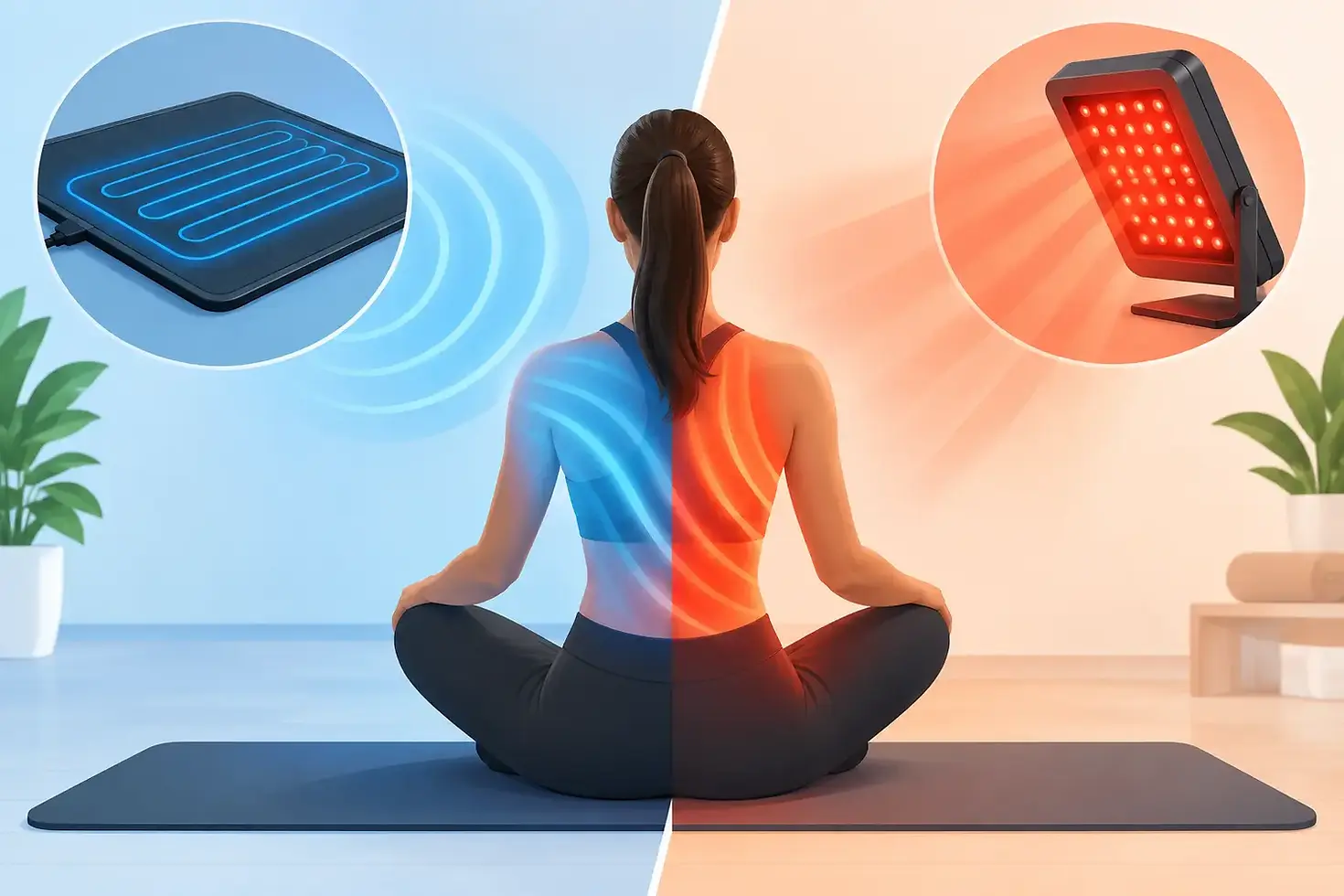
The simplest distinction is that PEMF focuses on electromagnetic stimulation, while infrared focuses on thermal comfort. PEMF sessions are generally quiet and low-heat. Infrared sessions are sensory, warming, and often deeply relaxing.
That difference changes how people use them. PEMF can be appealing when you want a passive recovery session without raising body temperature, such as during a midday break or before sleep. Far-infrared therapy can be especially appealing when stiffness, tension, and stress call for warmth, or when you want a ritual that encourages you to slow down.
Neither option should be judged only by intensity. A strong sweat does not automatically mean a better recovery session, and a subtle PEMF session is not necessarily doing less. The right choice comes down to your goals, preferences, health considerations, and consistency.
Which Modality Fits Your Goal?
For post-exercise recovery, either modality can have a place. A runner who feels generally depleted after training may prefer a warm far-infrared session to relax tight-feeling muscles. Another athlete may choose PEMF after an evening practice because they want to lie down, decompress, and avoid extra heat before bed.
For sleep routines and stress management, consider your response to temperature. Some people find gentle heat profoundly calming in the early evening, especially when paired with hydration and a screen-free wind-down. Others sleep better when they stay cool and may prefer PEMF as a low-stimulation part of their bedtime routine.
For everyday aches and desk-related tension, infrared's warming effect can feel more immediately satisfying. It can be a practical option when your shoulders, back, or legs feel tight from sitting. PEMF may suit someone who wants a more neutral session they can repeat regularly while working, meditating, or resting.
For a home wellness space, the question often becomes experiential. Infrared creates a visible, familiar comfort ritual. PEMF creates a polished recovery station that can be used any time of day, including by people who do not enjoy heat. In a spa, fitness club, hospitality setting, or recovery lounge, offering both can serve a wider range of guest preferences without making the experience feel overly clinical.
Why Many Recovery Routines Use Both
PEMF and infrared are complementary modalities, not direct substitutes. A well-designed routine can use each for what it does best for you.
You might choose far-infrared heat on a day when your body feels tense and you have time to rest afterward. On another day, you might use PEMF during a quiet 20- to 30-minute break when you want recovery support without warming up. Some people use infrared first for the comfort of heat, then lie on a PEMF mat as part of a longer relaxation ritual. Others keep the modalities separate so they can better understand how each affects their energy, soreness, and sleep.
Consistency matters more than chasing the most complicated protocol. Start with the manufacturer’s instructions, use conservative settings, and pay attention to simple signals: How do you feel during the session? Are you more relaxed afterward? Does it fit your schedule well enough to become a habit? The best wellness technology is often the one you will actually use.
Safety and Smart Use
Far-infrared therapy calls for sensible heat precautions. Hydrate before and after sessions, begin with shorter exposures, and stop if you feel dizzy, nauseated, overly hot, or unwell. Avoid using heat when you have impaired sensation in the treatment area, an acute injury where heat is not advised, or a health condition that affects temperature regulation unless a qualified clinician has cleared it.
PEMF devices should also be used thoughtfully. People with implanted electronic medical devices, including pacemakers or insulin pumps, should seek medical guidance before use. The same applies to pregnancy, seizure disorders, active cancer treatment, and any significant or unexplained health concern. Device-specific guidance matters, so always follow the instructions provided with your equipment.
If pain is severe, sudden, persistent, or accompanied by swelling, weakness, numbness, fever, chest symptoms, or loss of function, skip the self-care experiment and contact a healthcare professional. Wellness technology can support daily recovery, but it cannot diagnose what your body is trying to tell you.
Build the Routine Around Your Real Life
There is no prize for choosing the more technical modality or the hotter session. Choose PEMF when you want a quiet, low-heat recovery experience. Choose far-infrared when gentle warmth helps you release tension and settle into rest. And if both feel good and fit your needs, use them as distinct tools in a more intentional recovery environment.
The most valuable routine is the one that gives you a reliable pause: a place to breathe, recover, and return to the rest of your day feeling more like yourself.


Comments