
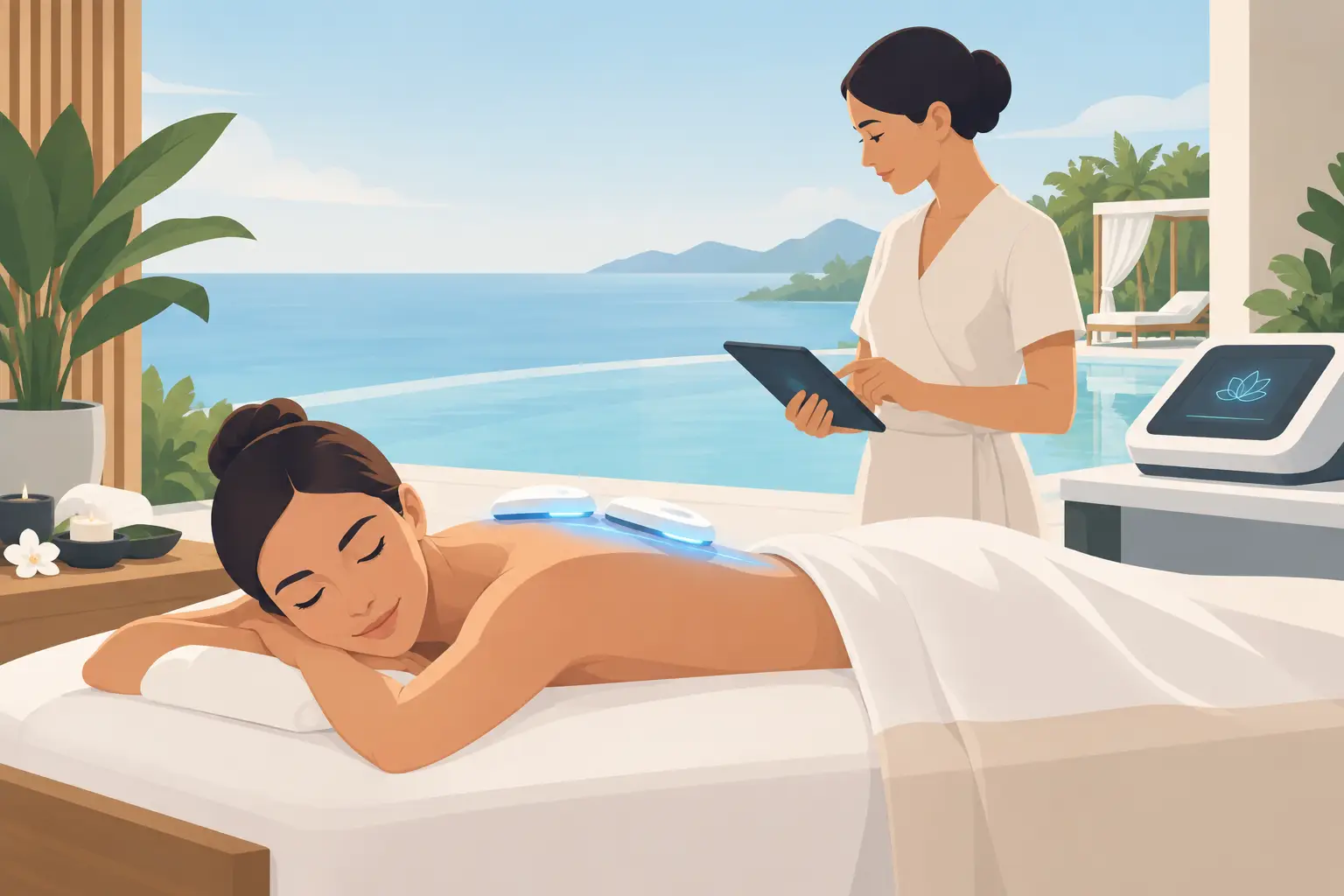
Resort Spa Technology Guests Will Remember
A guest may forget the name of a facial serum by the time they board their flight. They are far less likely to forget how deeply rested they felt after a quiet session of warmth, light, gentle stimulation, or guided recovery. That is the opportunity behind resort spa technology: creating experiences that feel personal, restorative, and useful well beyond a single appointment.
For luxury resorts, destination spas, and wellness properties, technology is not a substitute for expert therapists or thoughtful hospitality. It is a way to extend both. The right tools can help guests decompress between treatments, recover after travel or activity, and build a wellness rhythm that fits their stay. Just as importantly, they give a property a tangible point of difference in a market where a beautiful treatment room is no longer enough.
The New Spa Expectation Is Practical Wellbeing
Today’s resort guest may arrive after a cross-country flight, a red-eye from overseas, a day on the golf course, or an ambitious hike. Some are athletes managing training loads. Others are busy professionals who simply want their nervous system to slow down. Many are familiar with wellness technology from their homes, gyms, or social feeds and want to experience it in a more considered setting.
They are not necessarily looking for a clinical environment. They want comfort, privacy, and a clear sense of what an experience may support: relaxation, recovery, circulation, muscle comfort, sleep quality, or a calmer transition into the evening. A well-designed technology offering meets that need without asking guests to learn a new language before they can enjoy it.
This changes the role of the spa. Instead of being a place guests visit for one scheduled service, it can become a recovery destination woven into the entire property experience. A 20-minute session before dinner, a post-workout reset, or a quiet ritual before bed can be just as valuable as a traditional 90-minute treatment.
Resort Spa Technology Works Best as an Experience
The strongest wellness spaces do not display devices as a collection of gadgets. They build simple, intuitive experiences around real guest moments. The technology should feel integrated with the room, the service menu, the staff conversation, and the pace of the resort.
A far-infrared heat session, for example, can be positioned as a warming recovery ritual after time on the slopes, court, trail, or course. Red-light technology may fit naturally into a quiet pre-event refresh or a post-training recovery lounge. PEMF mats and loungers can create a low-effort rest experience for guests who want to lie back, unplug, and support relaxation after travel. TENS and EMS tools may be appropriate within professionally guided recovery services for guests seeking targeted muscle support.
The language matters. Guests should not feel pressured to decode acronyms or make medical decisions. A menu description can explain the sensation, the length of the session, and the intended wellness focus in plain terms. For example: a 30-minute heat and recovery session designed to help the body unwind after an active day. Clear, welcoming language makes sophisticated modalities feel accessible.
Design for the guest’s actual day
A technology menu is most effective when it reflects how guests use the property. A mountain resort may emphasize leg recovery, warmth, and relaxation after outdoor adventure. A beach destination may focus on unwinding, sleep preparation, and restorative downtime. An urban hotel spa may create express recovery options for travelers with limited schedules.
This is where a one-size-fits-all “biohacking room” can miss the mark. The equipment may be impressive, but the experience has to make sense for the setting. A guest on a romantic weekend may prefer a private, calming ritual. A sports group may value a recovery lounge with easy access and a faster turnover. Both can benefit from wellness technology, but they need different environments and service models.
Choosing the Right Modalities for a Resort
Selection should begin with the guest journey, not a product catalog. Consider where your spa has unmet demand, which experiences are difficult to deliver through hands-on treatments alone, and whether guests need a private service, a self-guided amenity, or both.
PEMF technology is often a natural fit for relaxation lounges and recovery-focused treatment add-ons. Guests can recline comfortably while the session supports a sense of rest and restoration. Far-infrared products bring a familiar warmth component that can complement massage, movement recovery, and relaxation rituals. Red-light devices can add a modern performance and skin-wellness dimension, particularly when staff can provide simple orientation and appropriate session guidance.
Other modalities can offer differentiation when used thoughtfully. Grounding and negative-ion solutions can contribute to a more intentional relaxation environment. TeraHertz foot massagers and wands may work well in a recovery suite or premium guest amenity program, especially where foot fatigue is common. TENS and EMS tools can have a place in professionally directed recovery settings, with clear protocols and appropriate screening.
The trade-off is operational complexity. More modalities do not automatically create a better guest experience. Each device requires a suitable location, staff confidence, cleaning procedures, guest education, and a plan for maintenance. A focused collection of technologies, delivered exceptionally well, will usually outperform a crowded room of underused equipment.
Prioritize comfort, privacy, and confidence
Premium wellness is sensory. Guests notice the recliner fabric, the lighting, the room temperature, the sound level, and whether the controls feel intimidating. Technology should reduce friction, not add it.
That may mean choosing a PEMF lounger that feels like a place to rest rather than a piece of equipment. It may mean placing red-light sessions in an enclosed, well-appointed room instead of a busy gym corridor. It may mean offering a staff-led first session so guests understand what to expect before they use an amenity independently.
Privacy is equally important. Some guests will be happy to use a communal recovery lounge; others will only explore unfamiliar wellness tools in a private suite. A flexible model can serve both preferences, with bookable one-on-one sessions alongside accessible recovery zones.
Staff Education Makes the Difference
A guest’s confidence often comes down to a 60-second conversation. Can the spa team explain what the technology does in understandable terms? Can they describe how a session may feel, who should check with a healthcare professional first, and how it fits into a broader wellness routine? Can they avoid exaggerated promises while still making the benefit clear?
Education should cover operation, sanitation, contraindication awareness, and hospitality. Staff do not need to sound like engineers. They need to sound like trusted guides who can say, “This is a relaxing 20-minute session that many guests choose after travel or exercise. Here is what you can expect, and here is how we will make you comfortable.”
A consultative partner such as Splish Wellness Tech can help properties think beyond device selection, including modality education, placement, and the practical details of building a cohesive recovery environment. This support is especially valuable when a resort is adding technology to an existing spa rather than designing a new wellness wing from the ground up.
Make Technology Part of the Revenue Strategy
Wellness technology can support revenue, but the strongest approach does not treat it as a novelty upsell. It should be offered as a meaningful extension of the guest’s goals.
A resort might pair a heat session with a deep-tissue massage, offer a recovery circuit after a guided fitness class, or create an evening sleep-preparation ritual with gentle light and a PEMF relaxation session. These combinations make the service easier to understand and can raise the perceived value of the spa itinerary.
There is also a membership and return-visit opportunity. Local guests, seasonal residents, and repeat travelers may value consistent access to recovery technology even when they are not booking a full spa day. The right program can create an ongoing relationship with the property, provided access feels convenient and the experience remains premium.
Metrics should look beyond immediate treatment revenue. Track utilization by time of day, repeat bookings, package attachment, guest feedback, and whether technology sessions increase use of other spa, fitness, or dining offerings. A recovery lounge that fills quiet afternoon hours may have strategic value even if it does not operate like a traditional treatment room.
Keep the Promise Grounded
Wellness technology deserves thoughtful communication. Resorts should avoid presenting devices as cures, diagnosing conditions, or promising specific medical outcomes. Instead, focus on the guest experience and on general wellbeing support: relaxation, muscle recovery, temporary comfort, restful routines, and time to recharge.
This grounded approach protects trust. It also gives guests room to define value for themselves. One person may love a red-light session as part of their pre-event routine. Another may return for infrared warmth after a long day outside. The shared outcome is not a miracle claim. It is a memorable moment of care.
The most successful resort spa technology feels less like a futuristic attraction and more like hospitality at its most attentive: a comfortable place, a thoughtful ritual, and a better way for guests to leave feeling like themselves again.


Comments