
How to Build a Recovery Room That Gets Used
A recovery room should not feel like a showroom or a place you have to earn access to after an extreme workout. The best spaces make it easier to pause, reset, and care for your body on the days you are sore, stressed, underslept, or simply ready to feel better. If you are asking how to build a recovery room, start with one practical question: what would make you use it three times a week?
For some households, that answer is a quiet corner with a PEMF mat and soft lighting. For an athlete, it may be a structured post-training space with heat, muscle stimulation, and a comfortable place to decompress. In a hospitality, fitness, or clinical setting, it may mean creating a polished experience that members, guests, or patients can understand and enjoy without a complicated learning curve.
Start With the Recovery Experience, Not the Equipment
Recovery is personal. Someone managing a demanding desk job may prioritize stress relief, circulation support, and better sleep. Someone training for an event may want tools that support muscle recovery and relaxation after hard sessions. A homeowner focused on healthy aging may value a consistent, low-impact wellness ritual that fits naturally into daily life.
Before choosing devices, define the primary job of the room. A clear purpose keeps the space from becoming an expensive collection of equipment with no rhythm behind it. You can have more than one goal, but rank them. For example, your room might be designed first for relaxation and sleep support, then for muscle recovery after exercise.
It also helps to decide who will use the room and when. A shared household space needs simple controls, flexible seating, and modalities that feel approachable to newcomers. A dedicated performance space can be more structured. Commercial environments need intuitive flow, clear operating protocols, cleaning procedures, and enough room for staff to guide guests comfortably.
Choose the Right Room and Layout
You do not need a large footprint to create a meaningful recovery space. A spare bedroom, home office, finished basement area, or quiet section of a primary suite can work well. What matters is that the room feels separate from work, clutter, and constant notifications.
Aim for enough open floor area to move safely around each device. Leave clearance for doors, reclining loungers, power cords, and ventilation. If heat is part of your plan, consider airflow and whether the room can stay comfortable after a session. If you are installing heavier equipment or building into a luxury residence or commercial site, confirm electrical capacity, floor load, and manufacturer placement requirements before making design decisions.
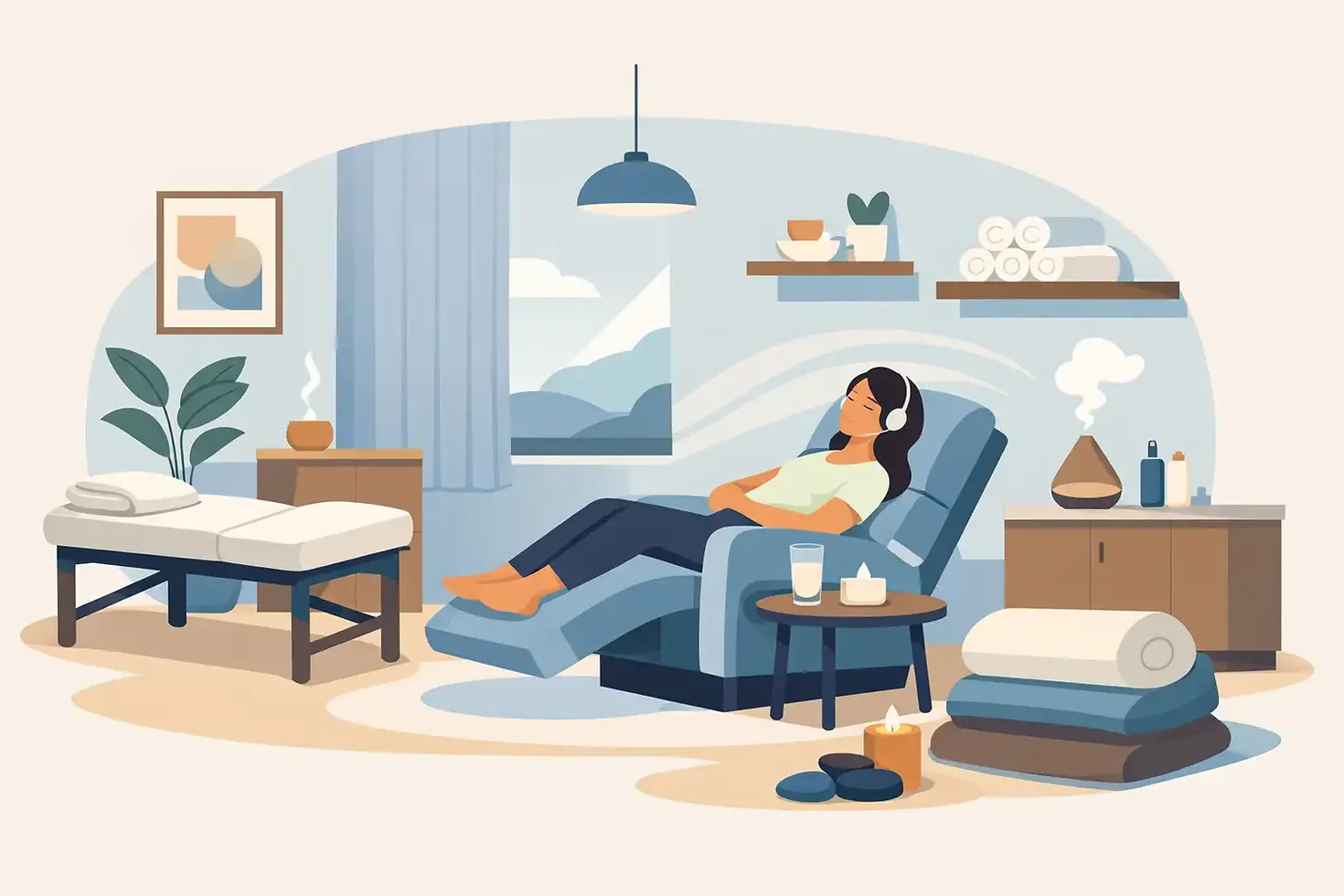
A simple layout often works best: create one active recovery zone and one restorative zone. The active zone can hold a TENS or EMS tool, a red-light device, or a foot massager. The restorative zone can center on a PEMF mat, lounger, heat product, or deeply comfortable reclining chair. This separation gives the room a natural progression, from targeted support to full-body relaxation.
For a more complete room, plan around four essentials:
A comfortable surface for lying down or reclining
Accessible power and cord management
Storage for towels, wraps, controls, and sanitation supplies
Soft, adjustable lighting that supports calm rather than stimulation
The goal is not to make the room look clinical. It is to make each session feel easy to begin and easy to finish.
Build Around Modalities You Will Actually Use
A multi-modality recovery room can support different needs across the week, but more technology is not automatically better. Start with one anchor modality, then add complementary tools as your routine develops.
PEMF for a Restorative Foundation
PEMF, or pulsed electromagnetic field therapy, is often a natural foundation for a recovery room because it can be used while resting. PEMF mats and loungers fit well into morning routines, post-workout wind-downs, and pre-sleep relaxation rituals. Many users choose PEMF as part of a broader approach to relaxation, circulation support, and everyday wellness.
The practical advantage is simple: you can lie down, breathe, and let the session create a boundary between activity and recovery. If your room has one central piece, a comfortable PEMF surface can set the tone for the entire space.
Far-Infrared Heat for Deep Relaxation
Far-infrared heat products can make a recovery room feel especially inviting on cold mornings, after long travel days, or following demanding training. Gentle heat can support relaxation and help loosen the feeling of everyday muscle tightness. It also encourages people to slow down, which is often the missing piece of recovery.
Heat is not right for every person or every situation. Hydration, session length, medication considerations, and individual health history matter. If you have a medical condition, are pregnant, or are unsure whether heat therapy is appropriate, speak with a qualified healthcare professional first.
Red Light for Consistent Self-Care
Red-light devices work well in spaces built for consistency. A short session can fit before a shower, after a workout, or alongside a morning wellness routine. Because red light is easy to incorporate without changing clothes or setting aside a long block of time, it can be a practical addition for people who prefer small, repeatable habits.
Placement matters. Mount or position the device where users can stand or sit at the recommended distance without crowding the room. Include a clean, simple area nearby for glasses, a water bottle, or a phone set to silent.
Targeted Tools for Muscles and Feet
TENS and EMS devices, TeraHertz foot massagers, and handheld wands can add targeted support when you want a more focused session. These tools are particularly useful for people whose recovery needs shift from day to day. One evening may call for a calming foot routine after hours on your feet; another may call for muscle stimulation after training.
Give smaller devices a dedicated drawer or cabinet, along with charging access and clear instructions. When accessories disappear into a closet, even excellent technology becomes inconvenient. A well-organized room turns a five-minute session into something you will actually do.
Design for Nervous System Comfort
Technology can support recovery, but the room itself should lower friction and invite calm. Start with lighting. Dimmable warm lights are more versatile than bright overhead fixtures, especially for evening sessions. Avoid overly cool, blue-white lighting if sleep support and relaxation are priorities.
Choose materials that feel good to touch: soft towels, a supportive throw, natural textures, and a non-slip rug where appropriate. Keep the color palette quiet and uncluttered. You do not need to turn the room into a spa replica, but visual calm has real value when your day has been full of noise and stimulation.
Sound is equally influential. Some people recover best with silence. Others prefer low-volume ambient music, breathwork guidance, or nature sounds. Consider acoustic softness through curtains, rugs, upholstered seating, or wall treatments, particularly in a basement, gym, or shared commercial environment.
Grounding products and negative-ion technology may also fit the sensory intention of the room for people seeking a more immersive relaxation ritual. Think of these additions as part of the atmosphere, rather than a substitute for the fundamentals of sleep, movement, hydration, nutrition, and appropriate medical care.
Create a Routine, Not Just a Beautiful Space
The difference between a recovery room that photographs well and one that changes your week is routine. Keep the first protocol uncomplicated. You might spend 15 to 20 minutes on a PEMF mat after work, use red light three mornings per week, or pair gentle heat with a no-screen wind-down before bed.
Match sessions to your real schedule rather than an idealized one. If your evenings are unpredictable, build a morning routine. If you only train hard on weekends, make the room available for longer sessions then and keep weekday use simple. Consistency is more valuable than occasional marathon sessions.
For families or teams, place a concise printed protocol in the room. It can explain how to turn on devices, recommended session ranges from the manufacturer, cleaning expectations, and basic safety reminders. In a commercial setting, this education should be part of the guest or member experience, not an afterthought. Splish Wellness Tech can help organizations think through modality selection and implementation so the space feels aligned with the people it serves.
Make Safety Part of the Premium Experience
A polished recovery room is also a safe one. Follow each device's instructions for use, cleaning, charging, and maintenance. Keep liquids away from electrical components, inspect cords regularly, and avoid overloading outlets. Make sure every user understands that wellness technology is designed to support a healthy lifestyle, not diagnose, treat, cure, or replace medical care.
Some modalities have specific contraindications. Implanted electronic devices, certain health conditions, pregnancy, recent procedures, and medication use can affect whether a device is appropriate. When in doubt, pause and ask a healthcare professional who understands your health history.
A recovery room earns its place in your home or facility when it becomes a reliable signal: this is where effort gives way to restoration. Build it around comfort, choose technology with a clear purpose, and leave enough simplicity in the routine that taking care of yourself feels like the obvious next step.


Comments